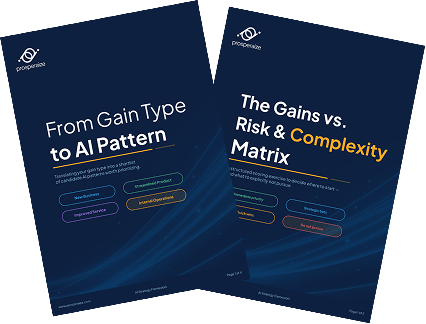
From a Business Goal to a Single Defensible AI Use Case. Two Frameworks. One Decision.
A two-step toolkit that takes your team from "what kind of AI could work here" to "which one do we build first" - with structured scoring, clear criteria, and a process designed to surface the disagreements that save you quarters of wasted effort.
Most teams skip from a business goal straight to a specific AI feature. They bypass the two decisions that determine whether the initiative survives contact with production: which AI pattern actually fits the problem, and which use case justifies going first. This toolkit gives your team a structured process for both decisions. Step one maps your business gain type to validated AI patterns. Step two scores those candidates on business value against real implementation risk - and produces one starting point the entire team can defend.
What's Inside

15 validated AI patterns organized by four gain types - new revenue, streamlined product, improved core service, and operational efficiency - so you start from what's been proven, not what sounds exciting.
The three selection criteria that determine feasibility - data readiness, metric alignment, and production validation - and how to evaluate each before committing engineering time
How to run the mapping session - which roles need to be in the room, what each lens brings, and why the best ideas emerge when product, design, engineering, and AI perspectives collide
A structured 2-axis scoring system - expected gain (revenue, cost, velocity, risk) vs. implementation complexity (data availability, technical feasibility, adoption risk, regulatory exposure) - with clear criteria for each dimension
Quadrant logic that dictates action - immediate priority, strategic bets, quick wins, and explicit "do not pursue" - so every candidate gets a verdict, not a vague ranking
How to run the scoring session - why independent scoring before discussion matters, and why the gap between a product lead's "low complexity" and an engineering lead's "high complexity" is the most valuable insight in the room
Who This Is For
Leadership teams at product companies who have a business goal and a metric - and need a structured path from "what AI could work here" to "which one do we build first."
If your team is past the exploration phase and ready to make a defensible investment decision, this is the exercise that gets you there.
Two structured frameworks that help teams go from a business goal to one defensible AI use case - by mapping gain types to validated patterns, then scoring candidates on business value against implementation complexity and risk.