
Stop costly losses before they happen
Identify suspicious transactions and unusual behaviour early enough to investigate before money leaves the business.
This isn’t a compliance cost — it’s the money you’re quietly losing. Fraud that clears, defects that ship, equipment that fails unannounced, risk that’s only obvious in the post-mortem: every one of these is a loss you took because nobody caught it in time.
The cheapest defect is the one you catch before it ships; the cheapest fraud is the one you stop before it clears. Risk & Quality Intelligence watches the transactions, processes, and equipment that people can’t realistically observe themselves. It identifies unusual activity, emerging problems, and potential failures while there’s still time to prevent them, not simply explain them afterward.
Connects to risk (losses avoided), cost (downtime, scrap, chargebacks), and trust (quality your customers feel).
Identify suspicious transactions and unusual behaviour early enough to investigate before money leaves the business.

Identify equipment issues before they interrupt production, operations, or customer commitments.

Identify defects earlier in the process so problems are fixed before they become returns, complaints, or damaged reputation.

Help your teams prioritize the issues most likely to create financial or operational impact.

Detect unusual patterns in everyday operations before they become incidents, delays, or expensive disruptions.
Not a dashboard nobody watches. An asset that helps your business identify important risks earlier, giving your teams more time to respond and reducing the cost of unexpected problems.
You own all of it — models, pipelines, the detection logic. No black box, no lock-in.
Too many unnecessary warnings are ignored. Too few warnings allow costly problems through. Finding the right balance is where most of the business value comes from.

Compounding
Value
Which risk is worth catching, and does your data carry the signal.
Read MoreProve detection accuracy and false-positive rate on your real data before the build.
Read MoreWired into your operations and response workflow, owned by you.
Read MoreRetune as fraud patterns and conditions evolve (they always do).
Read More
AI assets demand a breadth of expertise that no single role, team, or department was ever designed to carry. Here's what actually goes wrong and why.
Read more →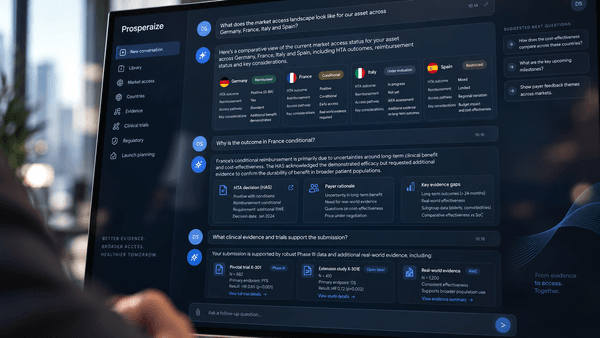
How a live AI system on a pharmaceutical market access platform was rebuilt on its own knowledge foundation, and single answers became a working dialogue with the data.
Read more →
Judge it the way you'd judge a machine. There are four questions, and your answers decide whether you're buying an asset or a write-off.
Read more →The AI Act & Compliance Audit checks whether your AI systems are following regulations. Risk & Quality Intelligence is an AI asset you run to catch fraud, defects, and failures in your business. Different jobs.
Accuracy and false-positive rate are exactly what we measure before anything is deployed — how well the system identifies real issues while avoiding unnecessary alerts. The goal isn’t more warnings, it’s warnings your teams trust enough to act on.
Depending on your business, it can learn from transactions, production data, operational systems, equipment sensors, images, and other business information. During the Readiness phase we determine whether your existing data is sufficient.
Yes — models, pipelines, logic. No lock-in.
Within our 30-day validation sprint, you’ll know whether earlier risk detection can create measurable business value before committing to a larger investment.
Where does your business lose money without realizing it? Which failures only become visible after customers complain or production stops? How much value could you protect?
Those are exactly the questions worth answering before investing in risk detection.
If you’re asking them internally, you’re probably at the right stage to talk.
