
In-product recommendations / next-best-action
Help customers discover the next most valuable action, feature, or insight at exactly the right moment. Great recommendations don't increase clicks—they increase customer success.
An AI feature won't reduce churn. Solving the reason customers leave will. Personalization nobody notices isn't personalization — it's compute you're paying for.
Customers stay because a product consistently helps them achieve what they came to do. AI should remove friction, shorten the path to value, and make every interaction feel more relevant—not simply add another feature to the interface. If it doesn't improve the customer experience in a way users genuinely notice, it won't improve retention either.
Connects to retention (churn, LTV), engagement (activation, usage), and velocity (time-to-value).
Help customers discover the next most valuable action, feature, or insight at exactly the right moment. Great recommendations don't increase clicks—they increase customer success.

Adapt the product to how different customers actually work, making the experience noticeably more relevant instead of treating every user the same.

Reduce the time between sign-up and the customer's first meaningful success. The faster users experience value, the more likely they are to adopt, expand, and stay.

Help users overcome friction without leaving the product. The best support experience is the one customers never need to interrupt their work for.
Every implementation is tied to a specific retention, engagement, or adoption goal, so success is measured by customer behaviour rather than feature usage.
You own all of it — models, pipelines, the personalization layer. No black box, no lock-in.
And the biggest retention win is often the least glamorous one: cutting time-to-value so new users hit their first success before they churn, which a flashy recommender rarely touches.

Compounding
Value
Which retention lever AI can move, and does your usage data support it.
Read MoreProve the lift on real users before the build.
Read MoreWired into your product, owned by you.
Read MoreKeep it relevant as user behavior shifts.
Read More
How we replaced a failing SQL agent and gave Pharma Market Access teams insights across 90+ jurisdictions in seconds.
Read more →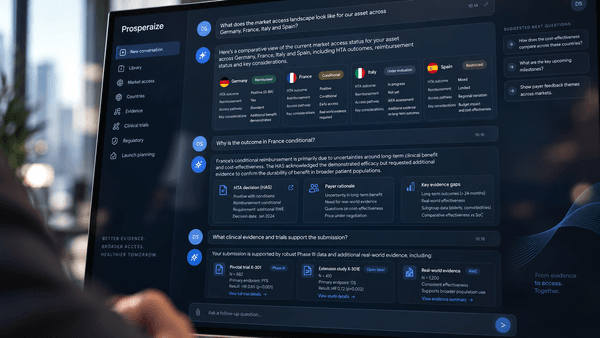
How a live AI system on a pharmaceutical market access platform was rebuilt on its own knowledge foundation, and single answers became a working dialogue with the data.
Read more →
Judge it the way you'd judge a machine. There are four questions, and your answers decide whether you're buying an asset or a write-off.
Read more →A widget shows items; this moves a retention metric. We start from the churn/engagement number and build the AI that moves it — recommender or not.
AI doesn't improve retention by itself. Customers stay because the product becomes more valuable, easier to use, or more difficult to replace. Before recommending any implementation, we identify which customer behavior you want to change and validate whether AI is the right way to influence it.
Not every customer interaction deserves AI. We prioritize the moments that have the greatest influence on activation, engagement, expansion, or retention. AI should be applied where it changes customer behavior—not simply where it's technically possible.
Enough to personalize against. We check that and tell you honestly if it's too thin.
Yes—models, pipelines, and personalization layer. No lock-in.
The lift is validated on real users within the 30-day sprint.
Which customer experiences create loyalty? Where does friction cause users to give up or leave? And if you removed your planned AI feature tomorrow, would your customers actually miss it?
Those are exactly the questions worth answering before investing in AI for your product.
If you're asking them internally, you're probably at the right stage to talk.
