
Validated and ready to build
You have a validated AI initiative and are ready to move from proof-of-concept to production.
You have a validated AI initiative and are ready to move from proof-of-concept to production.
'%3e%3crect%20x='20.7771'%20y='53.946'%20width='4'%20height='4'%20rx='2'%20fill='%23AFC3F8'/%3e%3c/g%3e%3cg%20filter='url(%23filter1_i_6041_344)'%3e%3crect%20x='20.7771'%20y='78.946'%20width='4'%20height='4'%20rx='2'%20fill='%23AFC3F8'/%3e%3c/g%3e%3cg%20filter='url(%23filter2_i_6041_344)'%3e%3crect%20x='113.777'%20y='53.946'%20width='4'%20height='4'%20rx='2'%20fill='%23AFC3F8'/%3e%3c/g%3e%3cg%20filter='url(%23filter3_i_6041_344)'%3e%3crect%20x='113.777'%20y='78.946'%20width='4'%20height='4'%20rx='2'%20fill='%23AFC3F8'/%3e%3c/g%3e%3cpath%20d='M74.2708%2076.1874V68.5208H47.4375V76.1874H57.0208V82.8958H47.4375V90.5624H74.2708V82.8958H64.6875V76.1874H74.2708Z'%20stroke='%2301203D'%20stroke-width='2'%20stroke-linecap='round'%20stroke-linejoin='round'/%3e%3cpath%20d='M74.2708%2076.1875L90.5625%2055.1042V47.4375H63.7292L47.4375%2068.5208'%20stroke='%2301203D'%20stroke-width='2'%20stroke-linecap='round'%20stroke-linejoin='round'/%3e%3cpath%20d='M74.2708%2090.5625L90.5624%2069.4792V65.6133L82.3993%2065.6689'%20stroke='%2301203D'%20stroke-width='2'%20stroke-linecap='round'%20stroke-linejoin='round'/%3e%3cdefs%3e%3cfilter%20id='filter0_i_6041_344'%20x='20.7771'%20y='53.946'%20width='4'%20height='5'%20filterUnits='userSpaceOnUse'%20color-interpolation-filters='sRGB'%3e%3cfeFlood%20flood-opacity='0'%20result='BackgroundImageFix'/%3e%3cfeBlend%20mode='normal'%20in='SourceGraphic'%20in2='BackgroundImageFix'%20result='shape'/%3e%3cfeColorMatrix%20in='SourceAlpha'%20type='matrix'%20values='0%200%200%200%200%200%200%200%200%200%200%200%200%200%200%200%200%200%20127%200'%20result='hardAlpha'/%3e%3cfeOffset%20dy='1'/%3e%3cfeGaussianBlur%20stdDeviation='1'/%3e%3cfeComposite%20in2='hardAlpha'%20operator='arithmetic'%20k2='-1'%20k3='1'/%3e%3cfeColorMatrix%20type='matrix'%20values='0%200%200%200%200.054902%200%200%200%200%200.247059%200%200%200%200%200.494118%200%200%200%200.08%200'/%3e%3cfeBlend%20mode='normal'%20in2='shape'%20result='effect1_innerShadow_6041_344'/%3e%3c/filter%3e%3cfilter%20id='filter1_i_6041_344'%20x='20.7771'%20y='78.946'%20width='4'%20height='5'%20filterUnits='userSpaceOnUse'%20color-interpolation-filters='sRGB'%3e%3cfeFlood%20flood-opacity='0'%20result='BackgroundImageFix'/%3e%3cfeBlend%20mode='normal'%20in='SourceGraphic'%20in2='BackgroundImageFix'%20result='shape'/%3e%3cfeColorMatrix%20in='SourceAlpha'%20type='matrix'%20values='0%200%200%200%200%200%200%200%200%200%200%200%200%200%200%200%200%200%20127%200'%20result='hardAlpha'/%3e%3cfeOffset%20dy='1'/%3e%3cfeGaussianBlur%20stdDeviation='1'/%3e%3cfeComposite%20in2='hardAlpha'%20operator='arithmetic'%20k2='-1'%20k3='1'/%3e%3cfeColorMatrix%20type='matrix'%20values='0%200%200%200%200.054902%200%200%200%200%200.247059%200%200%200%200%200.494118%200%200%200%200.08%200'/%3e%3cfeBlend%20mode='normal'%20in2='shape'%20result='effect1_innerShadow_6041_344'/%3e%3c/filter%3e%3cfilter%20id='filter2_i_6041_344'%20x='113.777'%20y='53.946'%20width='4'%20height='5'%20filterUnits='userSpaceOnUse'%20color-interpolation-filters='sRGB'%3e%3cfeFlood%20flood-opacity='0'%20result='BackgroundImageFix'/%3e%3cfeBlend%20mode='normal'%20in='SourceGraphic'%20in2='BackgroundImageFix'%20result='shape'/%3e%3cfeColorMatrix%20in='SourceAlpha'%20type='matrix'%20values='0%200%200%200%200%200%200%200%200%200%200%200%200%200%200%200%200%200%20127%200'%20result='hardAlpha'/%3e%3cfeOffset%20dy='1'/%3e%3cfeGaussianBlur%20stdDeviation='1'/%3e%3cfeComposite%20in2='hardAlpha'%20operator='arithmetic'%20k2='-1'%20k3='1'/%3e%3cfeColorMatrix%20type='matrix'%20values='0%200%200%200%200.054902%200%200%200%200%200.247059%200%200%200%200%200.494118%200%200%200%200.08%200'/%3e%3cfeBlend%20mode='normal'%20in2='shape'%20result='effect1_innerShadow_6041_344'/%3e%3c/filter%3e%3cfilter%20id='filter3_i_6041_344'%20x='113.777'%20y='78.946'%20width='4'%20height='5'%20filterUnits='userSpaceOnUse'%20color-interpolation-filters='sRGB'%3e%3cfeFlood%20flood-opacity='0'%20result='BackgroundImageFix'/%3e%3cfeBlend%20mode='normal'%20in='SourceGraphic'%20in2='BackgroundImageFix'%20result='shape'/%3e%3cfeColorMatrix%20in='SourceAlpha'%20type='matrix'%20values='0%200%200%200%200%200%200%200%200%200%200%200%200%200%200%200%200%200%20127%200'%20result='hardAlpha'/%3e%3cfeOffset%20dy='1'/%3e%3cfeGaussianBlur%20stdDeviation='1'/%3e%3cfeComposite%20in2='hardAlpha'%20operator='arithmetic'%20k2='-1'%20k3='1'/%3e%3cfeColorMatrix%20type='matrix'%20values='0%200%200%200%200.054902%200%200%200%200%200.247059%200%200%200%200%200.494118%200%200%200%200.08%200'/%3e%3cfeBlend%20mode='normal'%20in2='shape'%20result='effect1_innerShadow_6041_344'/%3e%3c/filter%3e%3c/defs%3e%3c/svg%3e)
You need a system built for reliability, security, and scale — not just a demo.

Your existing systems, workflows, and data pipelines need to be wired into the AI solution properly.

You want a partner who stays through deployment and beyond — not one who hands off and disappears.
The real challenge is engineering an AI capability that remains reliable, secure, cost-efficient, and valuable long after launch. Integrating AI into existing workflows, working with fragmented and imperfect data, managing unpredictable model behavior, controlling operating costs, earning user trust, and ensuring the system continues to perform as the business evolves are the challenges that determine whether AI creates value—or becomes another abandoned initiative.
That’s what we build. AI systems designed to operate in the real world, integrate into your business, and evolve into long-term business assets—not prototypes that simply happen to work.
A fully functional solution built for real-world scale. Not a prototype, not a wrapper around a third-party API.

Infrastructure that’s fast enough, cheap enough to run, and easy to maintain.
Wired into your existing systems, workflows, and data pipelines, so AI becomes part of your operations rather than a silo.

Production monitoring, alerting, and reliability engineering, so the system performs consistently at scale.
Source code, models, configurations, documentation, and the monitoring setup — all yours. No black box, no subscription, no dependency on us to keep it running.
A system in production is the start, not the finish. From here, AI value either decays or compounds — depending on whether anyone is managing it.
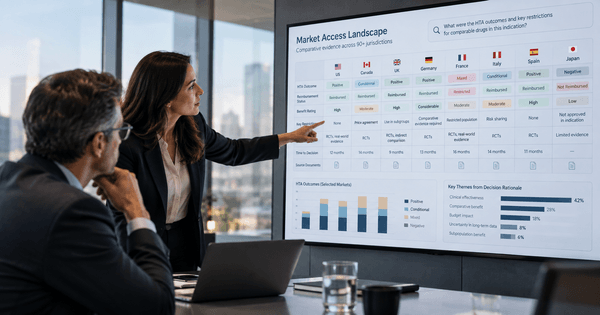
How we replaced a failing SQL agent and gave Pharma Market Access teams insights across 90+ jurisdictions in seconds.
Read more →
AI assets demand a breadth of expertise that no single role, team, or department was ever designed to carry. Here's what actually goes wrong and why.
Read more →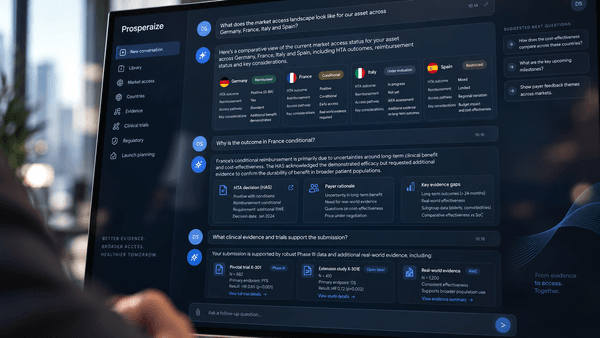
How a live AI system on a pharmaceutical market access platform was rebuilt on its own knowledge foundation, and single answers became a working dialogue with the data.
Read more →Yes. Everything we build belongs to you—source code, models, documentation, infrastructure configuration, and deployment assets. There are no recurring licenses, proprietary black boxes, or vendor lock-in.
Yes. We design AI to integrate with your existing applications, workflows, cloud infrastructure, and data—not to replace them. The goal is to make AI part of your business, not a separate platform.
Absolutely. Most successful AI initiatives extend existing systems rather than replace them. We integrate AI into the tools your teams already use.
Yes. We frequently work with organizations that have a working prototype, a stalled implementation, or an underperforming AI system. We identify what’s preventing production success, simplify where necessary, and help get the solution back on track.
We can train your team to operate the solution independently or continue supporting, monitoring, and optimizing it over time. The choice is yours.
Yes. AI Build & Integration is designed for organizations ready to move from a validated concept or proof of concept to a production-grade AI system.
We engineer for production from day one—designing for scalability, security, observability, monitoring, and operational reliability so the system performs consistently under real-world conditions, not just during demonstrations.
The timeline depends on the complexity of the use case, required integrations, and operational requirements. Every project begins with a defined scope, delivery roadmap, and measurable success criteria.
Not every problem requires custom development. We recommend the approach that creates the greatest long-term business value—even if that means integrating existing AI services instead of building everything from scratch.
Yes. Production AI creates value by working inside your existing business processes. We regularly integrate AI with enterprise applications, databases, APIs, and internal workflows.
We build systems your organization owns and can operate independently. Your code, models, architecture, documentation, and infrastructure remain under your control, making it easy to continue with your internal team or another partner.
A production-ready AI system is more than a working model. It integrates with your existing infrastructure, performs reliably under real-world conditions, is secure, observable, scalable, cost-efficient, and designed to evolve as your business changes. That’s the difference between an AI demo and an AI asset.
